Royal Harbor Docks And Lifts: What Buyers Should Know
February 19, 2026
February 19, 2026
Will your next Royal Harbor home actually fit your boat? In this Naples waterfront enclave, the answer depends on more than a pretty view. Canal width, turning room, water depth at low tide, and permit history all shape what you can dock and what you can build. In this guide, you’ll learn how Royal Harbor’s canals work, which rules control docks and lifts, and the due diligence that protects your purchase and your vessel. Let’s dive in.
Royal Harbor sits along Naples Bay with a network of canals that lead to Gulf waters through Gordon Pass. Many homes have private seawalls and docks, but every lot is different. Bayfront properties offer open-water views and quick access, while canal lots vary in width, turning room, and local depth.
The federal Gordon Pass channel is periodically maintained, which helps overall access to the Gulf. Recent project notes reference an authorized depth of about 12 feet in the pass and channel, but that does not guarantee depth at your dock. For value and safety, the decisive number is the water depth at your property referenced to mean low water. Use nautical charts for context and confirm on-site soundings during your inspection. You can review regional chart soundings referenced to mean lower low water for planning context through university-hosted NOAA resources.
For local submittals and review criteria, see Collier County’s application packet for boathouse establishment or dock facility extensions. It lists required surveys, water depth data, charts, cross-sections to tidal datum, and more. Review the packet here: Collier County dock/boathouse petition packet.
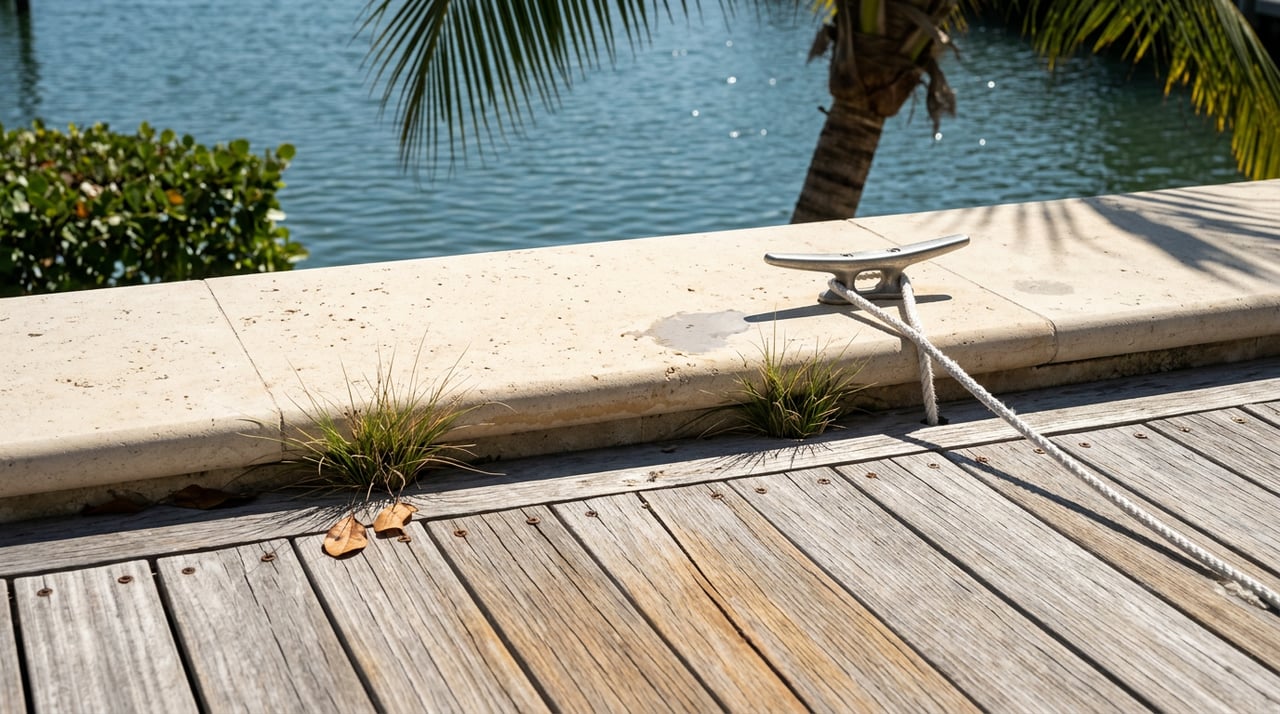
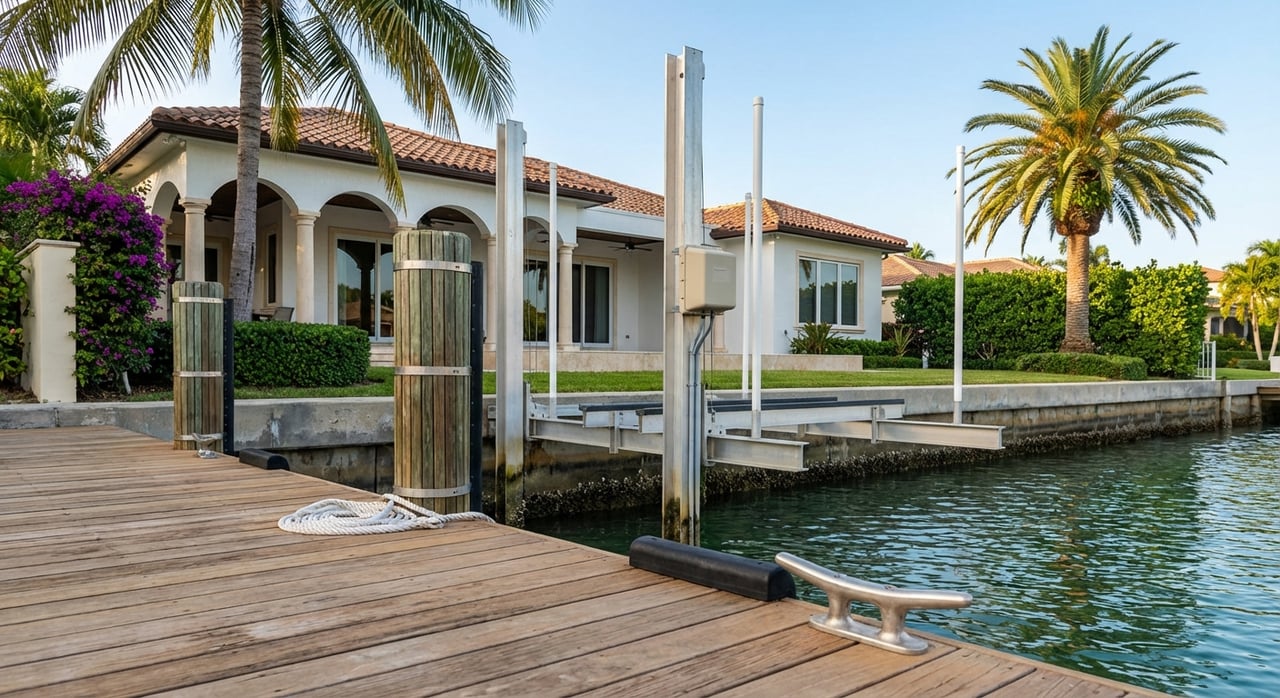
Around Royal Harbor you will see fixed pile-supported docks with wood or composite decking, marginal docks that run along the seawall, finger piers, mooring pilings, and boat lifts or davits. Some lifts include canopies. You should confirm which elements were permitted originally and which were added later. Collier County has an administrative path for boat-lift canopies with specific standards on width, length, height, color, and open sides. If a canopy exceeds those limits, a deviation process applies. Review the standards here: Collier County boat-lift canopy application.
Most residential dock work involves three layers of review: local (Collier County), state (Florida DEP/Board of Trustees for sovereign submerged lands), and federal (U.S. Army Corps of Engineers). Knowing the basics helps you plan realistic timelines and designs.
Collier County’s Growth Management process uses specific applications for dock and boathouse matters, including petitions for boathouse establishment or dock facility extensions under Land Development Code section 5.03.06. Pre-application meetings are encouraged or required. The packet outlines primary and secondary criteria, plan requirements, and fees, and it requires a signed and sealed survey and water-depth data at the proposed dock location. As a quick reference, county boathouse protrusion limits commonly cap extensions at 25 percent of canal width or 20 feet, whichever is less, with specific LDC criteria and exceptions controlling. Details are in the county petition packet.
Florida’s Chapter 18-21 of the Administrative Code covers how private docks can occupy state-owned submerged lands. The rule defines docks and appurtenances, marginal docks, and the concept of “preempted area.” Depending on your footprint over state bottom, you may need a letter of consent or a lease. Understanding these definitions early helps you avoid encroachments and design conflicts. See the rule language: F.A.C. Chapter 18-21 definitions and standards.
The U.S. Army Corps of Engineers Jacksonville District uses Regional General Permit SAJ-20 for many small, single-family docks and appurtenances, including boat lifts and davits. Your project may be eligible under SAJ-20, but verification is important because federal protected species conditions and essential fish habitat considerations can affect design and timing. Review the current permit here: USACE SAJ-20 reissuance.
Collier County falls under Florida Fish and Wildlife Conservation Commission Manatee Protection Plans. Manatee zones and nearby seagrass beds can influence allowable slip counts, add construction conditions, and affect timelines. Check local maps and plan for potential conditions at the state and federal levels. Learn more: FWC Manatee Protection Plans.
Fixed pile-supported docks are common, especially where bottom conditions allow pilings to be driven to proper depth. Floating docks appear where water-level variability or bottom conditions make them a better fit. Under state rules, “dock” typically includes the walkway, terminal platform, mooring pilings, lifts, and davits, and reviewers evaluate the total footprint.
Lift types include vertical and hydraulic platform lifts, cradle lifts, articulating lifts, and davits for smaller craft. The right lift depends on vessel weight and beam, available water depth at low tide, and what your permits allow. If a lift canopy is present or desired, confirm it meets the county’s administrative standards or that a deviation was approved.
Build these steps into your offer or inspection period so you know exactly what you are buying and what it will cost to make it boat-ready.
Request permit history and as-builts. Ask for building permit numbers, approved plans, and certificates of completion for the dock, lift, and seawall. Collier County expects proof of legal permits before work starts, and its petition checklist requires plan copies.
Order a marine survey focused on the dock and lift. A qualified marine surveyor should inspect pilings, fasteners, cleats, decking, lift motors and cables, and dockside electrical. The report helps with negotiations, safety, and insurance.
Get a signed and sealed land survey. Confirm riparian frontage and lines, which the county uses in protrusion and setback calculations. A current survey is also a required local submittal for most dock petitions.
Verify depth at mean low water. Require on-site soundings at the seawall and at the intended docking location during low tide, recorded to MLLW or mean low tide. County petitions require water-depth annotations on site plans.
Commission a seawall condition report. A coastal or structural engineer can assess scour, undermining, bulging, and tie-back condition. Seawall repairs can be significant and may trigger lender or insurer conditions.
Check for seagrass, mangroves, and manatee zones. If seagrass is nearby, additional steps and conditions may apply. Expect DEP and USACE to add conditions when sensitive resources are present.
Confirm any covenants or community rules. Royal Harbor listings often note no mandatory HOA, but recorded covenants, voluntary associations, or deed restrictions can still affect docks and lifts. Verify during due diligence.
Ask for maintenance and repair records. Request lift service logs, piling replacement history, dockside electrical permits, and any post-storm repair documentation to forecast near-term capital needs.
Sequence permitting early. If you plan changes, begin with a Collier County pre-application and confirm whether state or USACE verification is needed. Starting early keeps construction on schedule. See the county’s forms and portal: Collier County Land Use Applications.
When you pair the right lot with the right dock and lift plan, Royal Harbor offers one of Naples’ most rewarding boating lifestyles. Focus on depth at low tide, canal geometry, and clean permits. Build a strong team early so design and approvals keep pace with your goals and your season.
If you want a clear path from first showing to launch day, connect with The Norgart Team. We combine neighborhood mastery with a vetted marine network to help you evaluate water, structure, and permits before you commit. Become a VIP and request private access to on-market and discreet opportunities.
Stay up to date on the latest real estate trends.