Closing From Afar: Park Shore Buyer Timeline
December 25, 2025
December 25, 2025
Buying a Park Shore home from hundreds or thousands of miles away can feel daunting. You want a smooth closing, clear costs, and zero surprises when you finally get the keys. With the right plan and local partners, you can close confidently without hopping on a plane. In this guide, you’ll see a practical 30- to 60-day timeline, remote signing options, HOA and condo checkpoints, and the key steps that keep everything on track. Let’s dive in.
Expect a typical financed Park Shore purchase to close in about 30 to 60 days. Cash deals can be faster. Your exact timeline depends on inspections, HOA/condo steps, lender speed, and title clearing.
You sign the contract and send your earnest money to the escrow agent named in the agreement. If you wire funds, confirm instructions by phone using a known, trusted number to guard against fraud. Ask your title company to share their written wire policy.
Order inspections as soon as your offer is accepted. Standard items include home, roof, HVAC, pest/WDO, pool, and mold. For waterfront homes, add specialized checks like seawall and pilings. For condos, review the association’s rules, budgets, reserves, insurance, and meeting minutes. Join inspections by video so you can see what the inspector sees.
If you are using a mortgage, your lender will process your application, order the appraisal, and move the file through underwriting. Appraisals often schedule within 7 to 14 days and can take another 5 to 14 days to come back. For most loans, federal rules require the lender to deliver a Closing Disclosure at least 3 business days before closing. You can review the timing on the Consumer Financial Protection Bureau’s overview of the Closing Disclosure 3 business day rule.
Your title company will run a full title search and issue a title commitment. Any liens, boundary concerns, or unreleased mortgages must be cleared before closing. Stay in close contact with your title officer and respond quickly to document requests.
If the property is in a condo or HOA, the association provides governing documents and an estoppel letter that shows dues, assessments, violations, and transfer details. Turnaround can be same day or 7 to 15 days. Some condos require buyer approval, which can add time, so submit applications promptly.
Plan your final walkthrough within 24 to 48 hours of closing. You will receive your Closing Disclosure at least 3 business days before signing if you have a loan. You can close in person, remotely online if permitted by your lender and title company, or by approved power of attorney for certain transactions.
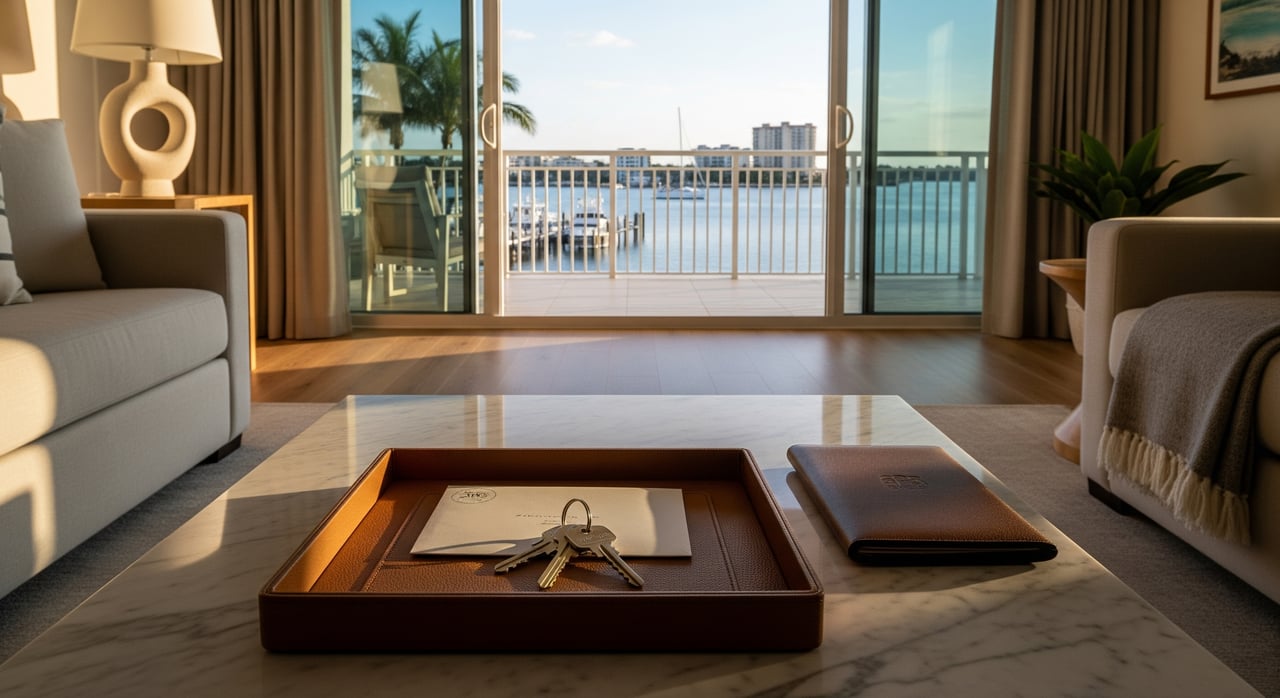
After signing and funding, your deed and mortgage are recorded with the Collier County Clerk & Comptroller recording office. Once recording is confirmed, possession and key release are coordinated with the title company and listing agent.
Florida allows Remote Online Notarization, and many title companies support electronic signatures. Review the Florida Department of State’s remote online notarization guidance and confirm your lender’s policies early. Some loan documents may still require in-person or lender-specific procedures, so plan ahead.
A limited POA can let a trusted representative sign for you. Many lenders limit or do not accept POAs for loan documents, so get written approval from your lender before relying on one. If you do use a POA, work with a Florida real estate attorney to draft and execute it correctly.
If you prefer to sign on paper, a mobile notary can come to you. For international buyers, notarizations may need apostille or consular legalization. Always confirm acceptability with your lender and title company.
Park Shore has many condominium buildings and HOA-governed residences. That means more documents and sometimes approvals. Budget for estoppel letters, confirm insurance requirements, and review any special assessments or capital projects. If buyer approval is needed, submit your application and ID items early to prevent delays.
Many Park Shore properties sit in FEMA-designated flood zones. If your loan is federally backed, flood insurance is typically required. Get quotes early and confirm coverage meets lender standards. Check the FEMA Flood Map Service Center to confirm the property’s flood zone and talk with an insurance broker who knows coastal Naples. For waterfront structures, consider specialized inspections of seawalls, docks, lifts, and pilings.
In Florida, the title company prepares closing documents and records the deed and mortgage after closing with the Collier County Clerk & Comptroller. Recording times and fees vary.
Florida imposes documentary stamp tax on deeds and certain taxes and fees on mortgages, plus local recording fees and title insurance premiums. Who pays each item can be negotiated in the contract. Ask your title company for an itemized estimate early.
You can review assessed values, parcel data, and general tax timing with the Collier County Property Appraiser. If you plan to claim Florida’s homestead exemption for a primary residence after closing, review deadlines and requirements with local officials.
Mortgage timelines often set the pace. Appraisals and underwriting can take several weeks, and you must receive your Closing Disclosure at least 3 business days before closing. You can read more about this on the CFPB’s page about the Closing Disclosure 3 business day rule. Keep your lender updated, provide documents promptly, and align the appraisal date with your inspection schedule and property access.
Wire fraud targets real estate closings. Follow these steps:
Condominiums follow Florida law, which sets standards for records, budgets, reserves, and transfers. Some associations require buyer approval or have specific insurance rules that affect closing. You can review the statute overview for context at Florida condominium law, Chapter 718. Always check the building’s exact application and approval process at the start of your contract.
You deserve a Park Shore home purchase that feels seamless, even if you never step into a closing room. Our team coordinates inspections, HOA and estoppel requests, appraisal access, flood and insurance guidance, title follow-up, and virtual walkthroughs. We keep you ahead of each deadline and align lender, title, and association timelines so your closing day is straightforward.
If you are considering a Park Shore purchase, we are ready to quarterback the process with white-glove care and trusted local partners. Become a VIP and let us tailor your remote closing plan. Connect with The Norgart Team to get started.
Stay up to date on the latest real estate trends.

dining
Old Naples News